

Konforti Jewelry
Sterling Silver Passover Kiddush Cup & Plate Set with 24K Gold Vermeil | Handcrafted Judaica Art
Sterling Silver Passover Kiddush Cup & Plate Set with 24K Gold Vermeil | Handcrafted Judaica Art
Previously commissioned. Each new piece is handcrafted upon request.
This sculptural Passover Kiddush cup and plate set “Windows of Freedom” is conceived as a deeply symbolic Judaica composition in sterling silver, uniting traditional ritual function with narrative relief sculpture, architectural ornamentation, and finely detailed silversmithing. The work draws inspiration from the story of Passover, themes of redemption and freedom, and the continuity of Jewish family tradition expressed through ceremonial storytelling in silver.
Each set is made to order and individually handcrafted within our family atelier, with an estimated production lead time of approximately 4 months from order confirmation. As part of the artistic process and provenance of the work, the client receives a complimentary signed original design sketch prepared by the atelier.
The Kiddush cup and matching plate are handcrafted in 925 sterling silver using traditional sculptural silversmithing techniques. The interior of the cup is finished in rich 24 karat gold vermeil, creating a luminous contrast against the darkened silver exterior while preserving traditional functional integrity for ceremonial ritual use. The sculptural surfaces are enhanced with silver tarnishing and patinated finishing, allowing the intricate relief work and architectural details to emerge with exceptional depth and dimensionality.
The cup measures approximately 11 cm in height (4.33 inches), while the plate measures approximately 25 cm in diameter (9.84 inches), creating a substantial ceremonial presence suitable both for ritual use and display.
Executed entirely through traditional techniques including wax carving, lost wax casting, hand chasing, engraving, and sculptural finishing, every component is individually crafted and refined by hand within the atelier. The composition preserves the organic detail and expressive depth characteristic of museum quality Judaica silverwork.
The cup itself unfolds as a circular narrative composition through four sculptural relief windows framed by architectural columns, Jerusalem stone inspired ornamentation, grapevine motifs, and textured masonry backgrounds inspired by the ancient city of Jerusalem.
The first relief depicts a man searching for the final crumbs of bread before Passover, symbolizing the traditional bedikat chametz ritual and the spiritual preparation preceding the holiday. The second relief portrays a young boy holding the afikoman, capturing one of the most beloved moments of the Seder tradition and emphasizing the central role of children in the continuity of Jewish heritage.
The third relief presents a father and son gathered around the Passover table during Kiddush, symbolizing family unity, transmission of tradition, and sacred ritual continuity across generations. The fourth relief depicts a young man reading from the Passover Haggadah, representing remembrance, learning, and the retelling of the Exodus narrative at the center of the Passover celebration.
Between the narrative windows appear sculptural wine goblets and a wine pitcher, representing the four ceremonial cups of wine traditionally consumed throughout the Passover Seder. Grapevines, leaves, and clusters of grapes flow throughout the composition, reinforcing themes of blessing, celebration, and ritual abundance.
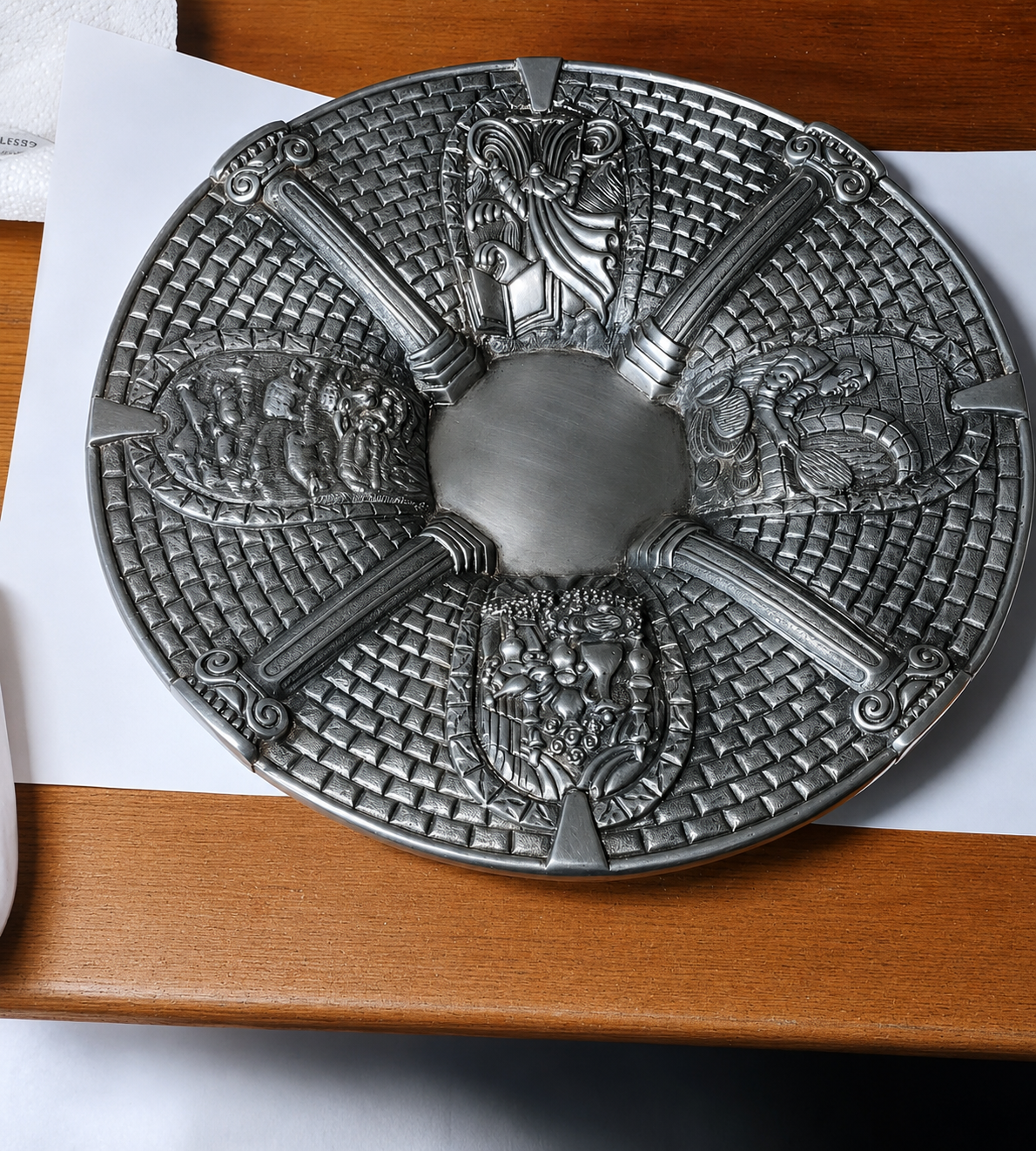
The accompanying plate continues the symbolic language of the set through four sculptural narrative scenes arranged around a richly textured architectural composition inspired by Jerusalem stone paving and classical columns.
One relief depicts Moses alongside the parting of the Red Sea and the Ten Commandments, symbolizing divine revelation, redemption, and liberation from slavery. Another scene portrays the preparation and baking of matzah, representing humility, haste, and the foundational traditions of Passover observance.
A third relief presents the Paschal lamb, symbolizing divine protection, sacrifice, redemption, and the transition from slavery into freedom during the Exodus story. The final relief depicts a festive holiday table overflowing with food and abundance, celebrating freedom, family gathering, and the joy of the Passover feast.
The interplay between polished silver surfaces, deep patinated recesses, architectural relief sculpture, and gold vermeil creates a dynamic interaction with light, revealing new sculptural nuances and details from every angle. The work reads simultaneously as a functional ceremonial object, a collectible sculptural artwork, and a narrative interpretation of Jewish memory and ritual tradition.
This Passover Kiddush set is conceived not only as a ceremonial Judaica object, but also as a collectible work of art intended to be passed through generations as part of a continuing family legacy.
We also create bespoke works on demand, with the possibility to incorporate personalized inscriptions, family dedications, symbolic variations, or custom design modifications while preserving the artistic integrity of the original composition.
Each piece is created within the Konforti family atelier, a multi generational workshop led by Inga and Barak Konforti, and founded by master artists Ella Konforti and Yuri Bogoslavsky. Every work is entirely handcrafted using traditional techniques including wax carving, lost wax casting, hand chasing, engraving, and meticulous sculptural finishing, continuing a shared artistic legacy shaped across generations.
Shipping & Delivery
Complimentary worldwide shipping and full insurance are included. Delivery is arranged individually through a professional fine art and luxury object logistics service, including white glove handling, secure museum standard packaging, and insured transit tailored to destination and preference.
Taxes & Duties
Import duties, VAT, customs clearance fees, and any applicable local taxes are not included in the listed price. These charges are determined by the destination country and remain the responsibility of the buyer at the time of customs clearance.