

Konforti Jewelry
925 Sterling Silver Passover Matzah Holder, Hand-Painted Exodus Judaica
925 Sterling Silver Passover Matzah Holder, Hand-Painted Exodus Judaica
Previously commissioned. Each new piece is handcrafted upon request.
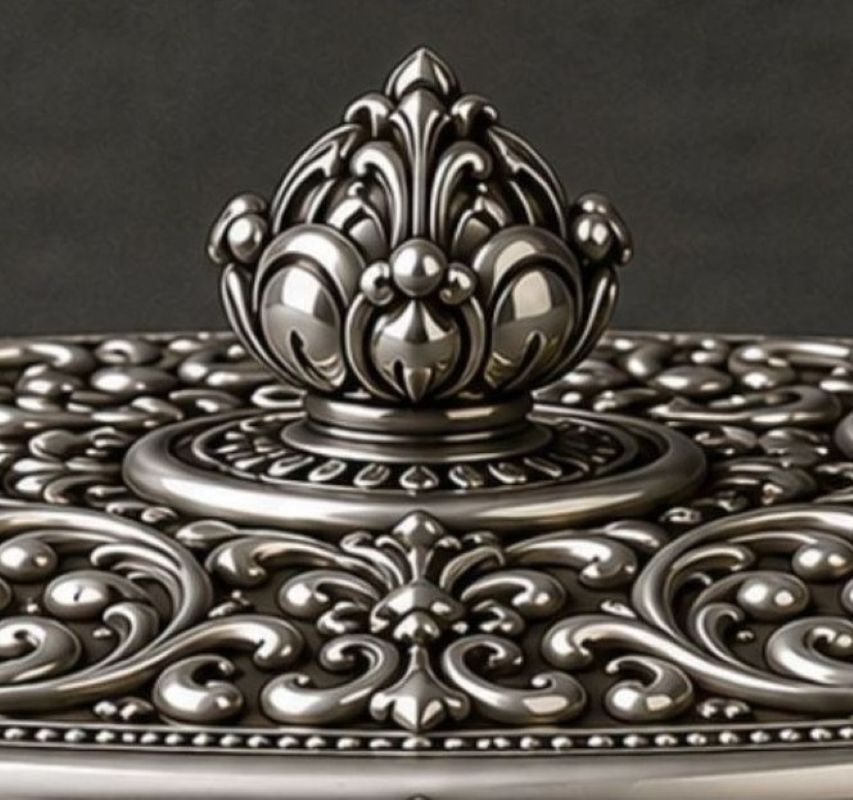
This exceptional Judaica matzah holder "The Journey to Freedom" celebrates Passover and the extraordinary biblical narrative of the Exodus through an elaborate composition combining hand-worked 925 sterling silver, richly tarnished and polished surfaces, sculptural ornamentation, and a series of original oil paintings depicting defining moments from the story of Yetziat Mitzrayim-the Exodus from Egypt.
Conceived as both a functional ceremonial object and an exceptional work of decorative art, the piece brings together the Passover tradition, the biblical journey of the Children of Israel from slavery toward freedom, and the visual language of historic European silverwork.
The matzah holder is individually created according to the preferred size of the collector and the dimensions of the matzah traditionally used by the family. Available diameters range from approximately 30 to 50 cm (11.8 to 19.7 inches), allowing the proportions of the piece to be adapted for different family and communal traditions, including the use of larger handmade matzot.
Around the body of the matzah holder, the ornamentation becomes an architectural framework for six original oil paintings, each devoted to an important episode or idea connected with the biblical narrative of the Exodus and the spiritual journey that followed it.
One of the principal scenes portrays Moses at Mount Sinai with the Tablets of the Covenant. Following the departure from Egypt, the Children of Israel arrive at Mount Sinai, where the covenant between God and the people of Israel is established and Moses receives the tablets bearing the Ten Commandments. The scene represents not merely liberation from physical slavery, but the transformation of a newly freed people through covenant, law, and responsibility.
Another painting depicts Israelite families journeying through the desert after leaving Egypt. Men, women, children, and their belongings move together through the desert, evoking the immense human dimension of the Exodus. This scene focuses upon the families who undertook the journey-the generations leaving behind the world they had known and traveling toward an uncertain future as a free people.
A further scene portrays one of the most iconic moments in the Torah: Moses at the splitting of the Red Sea, traditionally identified as Kriyat Yam Suf. Moses stands before the divided waters as the Children of Israel pass through, transforming the surrounding sea into a monumental image of deliverance. The episode represents the decisive separation between slavery and freedom and remains one of the most powerful visual symbols associated with the Exodus.
The drama of this miracle continues in another painting portraying Pharaoh’s pursuing forces overwhelmed by the returning waters. According to the biblical account, after the Israelites pass through the sea, the Egyptian forces pursue them into the divided waters. The sea then returns, overwhelming Pharaoh’s chariots and army while the Israelites escape beyond their reach. The composition emphasizes the dramatic conclusion of the flight from Egypt: those who had pursued the Children of Israel are unable to recapture them, marking the definitive end of their enslavement.
Another painting returns to the events in Egypt and portrays Moses and Aaron appearing before Pharaoh, specifically recalling the sign in which Aaron casts down his staff before Pharaoh and it becomes a serpent. The miracle forms part of Moses and Aaron’s confrontation with the Egyptian ruler and their demand that he release the Children of Israel. The scene represents the beginning of the great struggle between Pharaoh’s refusal and the divine command, “Let My people go.”
The sixth painting extends the visual narrative beyond the chronological events of the Exodus itself, depicting the Jewish people before the Beit HaMikdash in Jerusalem. The Temple belongs to a considerably later period of Jewish history and is therefore not presented as an event that occurred during the Exodus. Instead, its inclusion creates a symbolic conclusion to the composition: the journey that begins with liberation from Egypt ultimately becomes part of the much larger history of the Jewish people, their covenant, their religious life, and Jerusalem as a spiritual center.
This narrative is particularly meaningful in the context of a matzah holder. Matzah is among the most recognizable symbols of Passover and of the Exodus itself-the unleavened bread associated with the haste in which the Israelites departed Egypt. Here, the matzah is physically surrounded by images of the very history commemorated at the Passover Seder, allowing the ceremonial object and its biblical narrative to become inseparable.
Every example is individually handcrafted within the Konforti family atelier and produced exclusively to order with the lead time of approximately 6 months. Due to the handmade nature of the silverwork, sculptural ornamentation, surface finishing, and original painting, subtle variations are inherent to each example and form part of the individuality of the finished work.
As part of the artistic process and provenance of the piece, the collector receives a complimentary signed original design sketch prepared by the atelier, creating a direct connection between the initial conception of the work and the completed ceremonial object.
The Konforti family atelier is a multi-generational workshop led by Inga and Barak Konforti and founded by master artists Ella Konforti and Yuri Bogoslavsky. For decades, the atelier has specialized in the creation of museum-quality luxury objects, monumental chess sets, Judaica, centerpieces, sculptural vessels, and exceptional decorative works that unite fine art, historical and cultural narrative, and traditional European craftsmanship.
Shipping & Delivery
Complimentary worldwide shipping and full insurance are included. Delivery is arranged individually through specialized fine-art logistics services utilizing secure museum-standard packaging, white-glove handling, and fully insured transit tailored to the destination and requirements of the collector.
Taxes & Duties
Import duties, VAT, customs clearance fees, and any applicable local taxes are not included in the listed price. Such charges are determined by the regulations of the destination country and remain the responsibility of the purchaser at the time of importation and customs clearance.